Lamentations
“They are new every morning: great is thy faithfulness.” Lam. 3:23
Lamentations is a collection of five poems mourning the destruction of Jerusalem and its temple by the Babylonians. No author is named in it; it is traditionally attributed to the prophet Jeremiah, who saw the city fall, and the Church’s edition titles it “The Lamentations of Jeremiah.” The Guide to the Scriptures places it after the fall of the city, about 586 B.C.
Chapters 1, 2, and 4 each have 22 verses that begin with the successive letters of the Hebrew alphabet; chapter 3 has 66, three for each letter; chapter 5 has 22 verses but does not follow the alphabet. The Lord does not answer anywhere in the book. This companion goes through all five chapters and tries to anticipate the questions a careful reader asks: Who is speaking? What had happened to the city? What does that image mean? Where is Christ in this?
The chapters
Five poems over the fall of Jerusalem. The first four follow the Hebrew alphabet, and the hope of the book stands at the middle of the middle poem.
The City That Sits Solitary
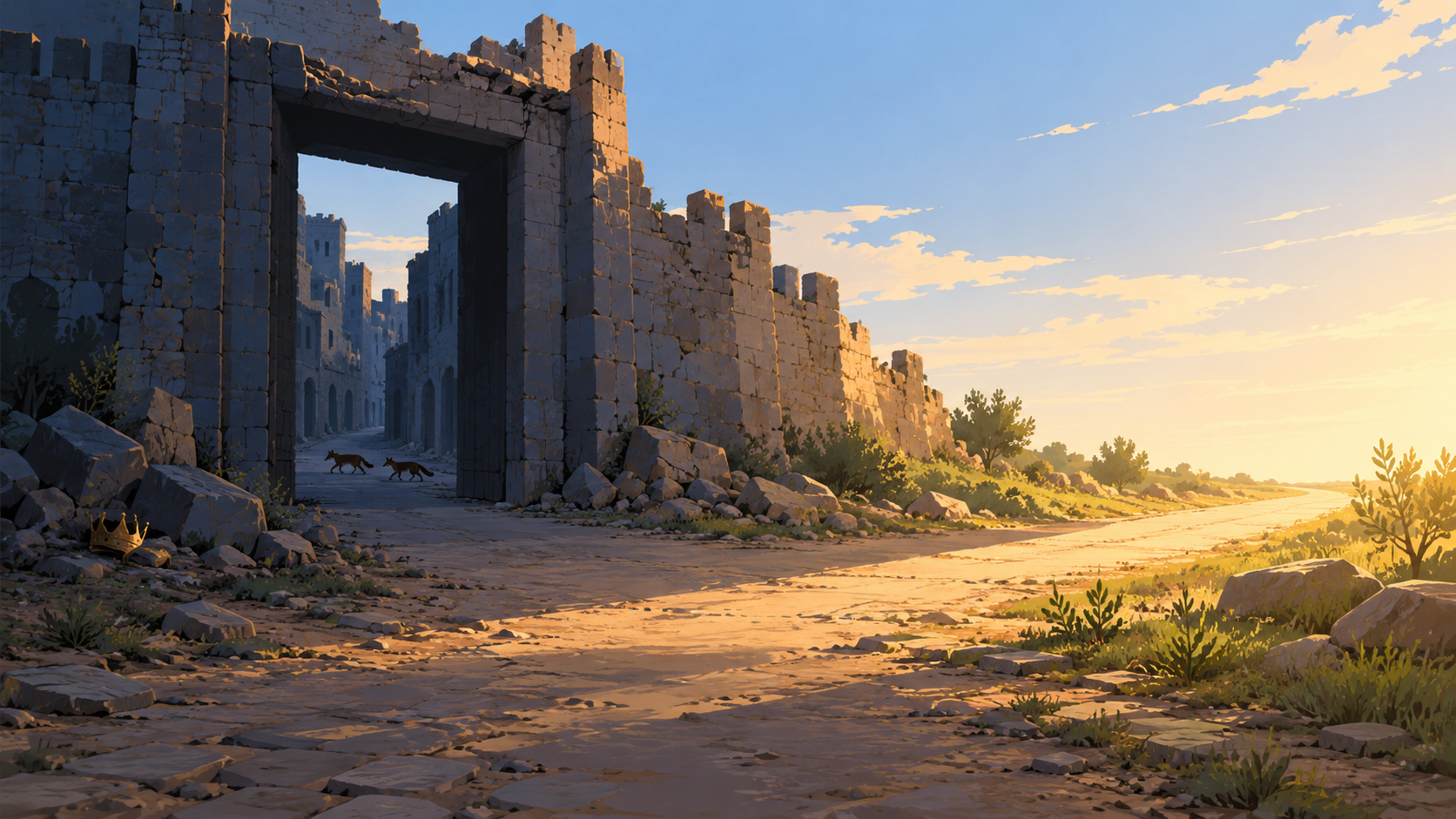
Jerusalem sits alone like a widow, with none to comfort her, and speaks of her own sorrow. The second poem says that the Lord Himself has done this in His anger, and calls the city to pour out her heart before Him.
- 1 How Doth the City Sit Solitary Jerusalem, emptied and conquered, is a widow with no one to comfort her. The poet describes her, then she speaks for herself, confesses that the Lord is righteous, and asks Him to look.
- 2 The Lord Has Done What He Planned The second poem describes the fall of Jerusalem as the Lord’s own doing, in His anger, then turns the city toward Him in prayer: “Arise, cry out in the night.”
The Man That Hath Seen Affliction
One voice speaks of his own affliction, then remembers that the Lord’s compassions fail not and are new every morning. He calls the people to search their ways and turn again to the Lord.
The Siege Remembered and the People’s Prayer
The fourth poem looks back on the siege, when the gold became dim and the children hungered. The fifth is a prayer of the whole people, asking the Lord to remember them and to turn them to Himself.
- 4 How Is the Gold Become Dim The fourth poem looks back over the siege street by street, from the starving children to the fallen princes, names the prophets and priests as the cause, watches the king taken in the enemy’s pits, and ends by telling Zion that its punishment is finished and Edom’s is not.
- 5 The People’s Prayer The last poem stops describing the city and speaks to the Lord. The people list what has been lost, confess their own sin, and ask Him to turn them back, and the book ends on a line that is not comfort.
Beloved passages
- “How doth the city sit solitary, that was full of people!”Lamentations 1:1
- “Is it nothing to you, all ye that pass by?”Lamentations 1:12
- “his compassions fail not”Lamentations 3:22
- “They are new every morning: great is thy faithfulness”Lamentations 3:23
- “hope and quietly wait for the salvation of the LORD”Lamentations 3:26
- “Let us search and try our ways, and turn again to the LORD”Lamentations 3:40
- “How is the gold become dim!”Lamentations 4:1
- “Turn thou us unto thee, O LORD, and we shall be turned”Lamentations 5:21
Most-used sources
Every note cites its sources. These are the ones this commentary leans on most.
- “Lamentations, book of”, Bible Dictionary.
- “Lamentations, Book of”, Guide to the Scriptures.
- Chapter 24: The Babylonian Captivity (Jeremiah 20–22; 24–29; 32; 34–45; 52; Lamentations), Old Testament Student Manual: 1 Kings–Malachi (2003).
- Jeremiah 31–33; 36–38; Lamentations 1; 3, Scripture Helps: Old Testament.