Abraham Facsimile 1
Abraham on the Altar
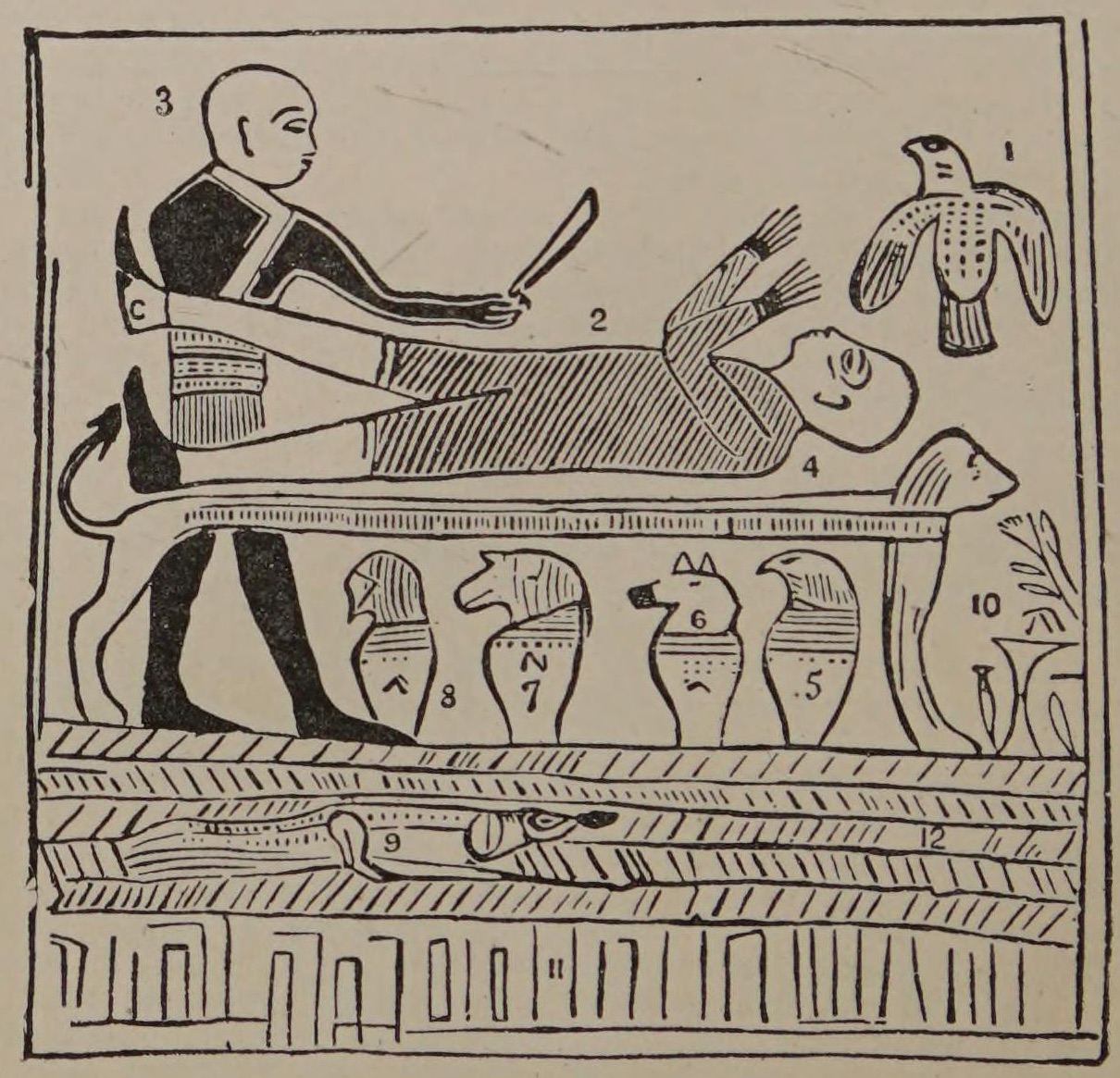
The picture Abraham points to in the first chapter: the altar, the priest of Elkenah, and the angel of the Lord.
Last revised
About this facsimile
Abraham sends the reader to this picture twice in his first chapter. Of the altar on which the priests meant to kill him he writes, “that you may have a knowledge of this altar, I will refer you to the representation at the commencement of this record” (Abr. 1:12), and that representation is Facsimile 1. Of the gods the altar stood before, he says he has given “the fashion of them in the figures at the beginning” (Abr. 1:14). The explanation below names the altar (figure 4) and the five gods (figures 5 to 9).
The three facsimiles were first printed with the book in 1842, each with Joseph Smith’s explanation of its figures. Most of those explanations do not agree with what Egyptologists now say of the same figures, though scholars have noted some parallels. On how the pictures belong to Abraham’s text the Church’s statement is brief: “We don’t know how the facsimiles relate to the text.” The notes below give what studies of the plate have found or proposed, each with the strength its study gives it.
Tap any highlighted phrase to open a note beneath its figurein the margin.
Explanation of the Above Cut
1 The Angel of the Lord.
2 Abraham fastened upon an altar.
3 The idolatrous priest of Elkenah attempting to offer up Abraham as a sacrifice.
4 The altar for sacrifice by the idolatrous priests, standing before the gods of Elkenah, Libnah, Mahmackrah, Korash, and Pharaoh.
5 The idolatrous god of Elkenah.
6 The idolatrous god of Libnah.
7 The idolatrous god of Mahmackrah.
8 The idolatrous god of Korash.
9 The idolatrous god of Pharaoh.
10 Abraham in Egypt.
11 Designed to represent the pillars of heaven, as understood by the Egyptians.
12 Raukeeyang, signifying expanse, or the firmament over our heads; but in this case, in relation to this subject, the Egyptians meant it to signify Shaumau, to be high, or the heavens, answering to the Hebrew word, Shaumahyeem.
Sources & further reading
- The Holy Scriptures (Latter-day Saint editions), text and chapter headings, The Church of Jesus Christ of Latter-day Saints.
- “Origins of the Book of Abraham”, Topics and Questions, Gospel Library.
- Stephen O. Smoot, John Gee, Kerry Muhlestein, and John S. Thompson, “Approaching the Facsimiles”, BYU Studies Quarterly 61, no. 4 (2022): 209.
- Stephen O. Smoot, John Gee, Kerry Muhlestein, and John S. Thompson, “A Semitic View of the Facsimiles”, BYU Studies Quarterly 61, no. 4 (2022): 215.
- Stephen O. Smoot, John Gee, Kerry Muhlestein, and John S. Thompson, “Facsimile 1 as a Sacrifice Scene”, BYU Studies Quarterly 61, no. 4 (2022): 221.
- Stephen O. Smoot, John Gee, Kerry Muhlestein, and John S. Thompson, “The Idolatrous Priest (Facsimile 1, Figure 3)”, BYU Studies Quarterly 61, no. 4 (2022): 227.
- Stephen O. Smoot, John Gee, Kerry Muhlestein, and John S. Thompson, “The Ancient Owners of the Joseph Smith Papyri”, BYU Studies Quarterly 61, no. 4 (2022): 201.