This guide covers Judah under the Persian kings, from Cyrus's taking of Babylon (539 or 538 BC) to Malachi's time (about 430). Persia conquered the Babylonian kingdom,1 and Judah remained a Persian province until 334, when it passed to Alexander the Great.2 For the whole sweep see A Timeline of the Old Testament. The exile before it is in Babylon and the Exile.
The map
Rulers and events
All dates are approximate; where they differ, the table gives each.
| Date (BC) | Who | What happened | Read |
|---|---|---|---|
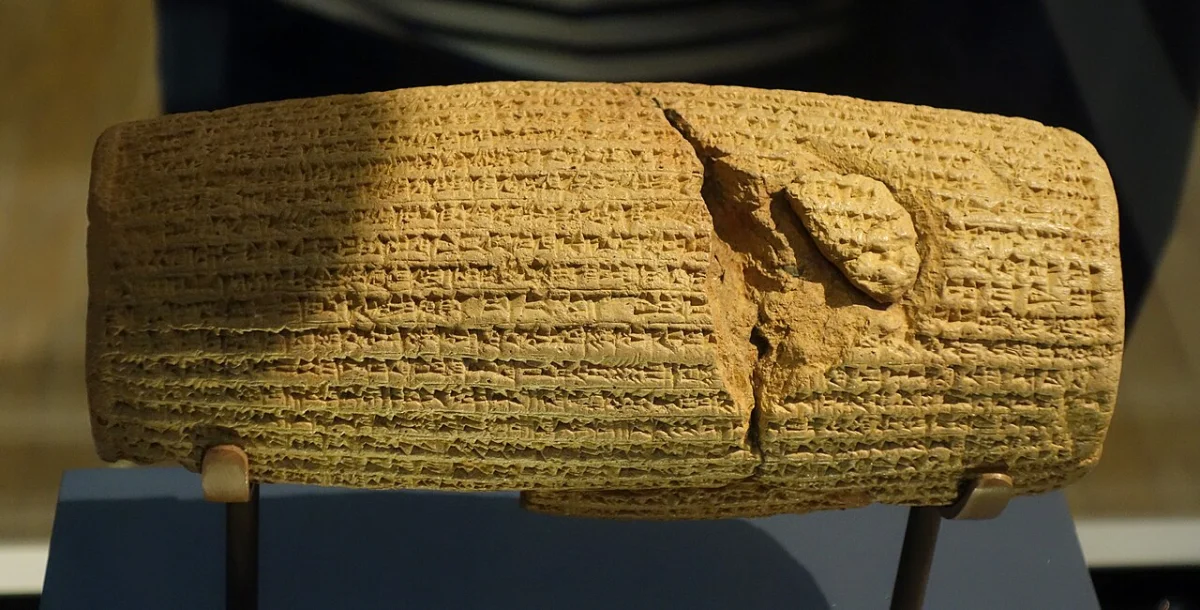
| 539 or 538 | Persia: Cyrus | Takes Babylon;1,2 he overthrew the Chaldean dynasty3 | 2 Chr. 36:22–23 |
| 538, 537 or 5364,5,6 | Cyrus's decree | “he hath charged me to build him an house at Jerusalem” (Ezra 1:2) | Ezra 1 |
| after 536 | Sheshbazzar, Zerubbabel and Joshua | A first group of forty to fifty thousand returns;7 Zerubbabel, Jehoiachin's grandson, is governor.8 Sheshbazzar may be Zerubbabel's Persian name8 or, likelier, a second person9 | Ezra 1:8; Ezra 2–3 |
| to 520 | The work stopped | The Samaritans' offer of help is refused and they oppose the work;10 “Then ceased the work of the house of God which is at Jerusalem. So it ceased unto the second year of the reign of Darius king of Persia” (Ezra 4:24) | Ezra 4 |
| 520 | Darius I; Haggai and Zechariah | Darius is the son of Hystaspes;11 Haggai spoke about 520,12 Zechariah in 520–51813 | Ezra 5; Hag. 1; Zech. 1 |
| 516 or 515 | The temple finished | “in the sixth year of the reign of Darius the king” (Ezra 6:15), dated 51614 or 5151 | Ezra 6 |
| 486–465 | Xerxes (Ahasuerus) | Esther is set in his reign15 | Esth. 1 |
| 458 | Artaxerxes; Ezra | Ezra obtains an edict to take exiles to Jerusalem;16 the date of his mission is disputed7 | Ezra 7 |
| 445 or 444 | Artaxerxes; Nehemiah | The cupbearer is commissioned to rebuild the walls,17 dated 4457 or 4445 | Neh. 2; Neh. 6:15 |
| about 430 | Malachi | His prophecy is dated about 43018 | Mal. 1 |
| 334 | Alexander | Judah passes to him from Persia2 |
The nations
| Nation | Who and where | With Judah |
|---|---|---|
| Persia and Media | Susa (Shushan) was the capital under Cyrus20 | Nehemiah served the king “in Shushan the palace” (Neh. 1:1) |
| The Samaritans | Descended from foreign colonists and from Israelites who escaped the captivity;10 Sanballat was governor of Samaria1 | Became “bitter opponents of the Jews”10 |
| Ammon | Tobiah was an Ammonite official, influential in Jerusalem1 | “Sanballat the Horonite, and Tobiah the servant, the Ammonite, and Geshem the Arabian” mocked the wall-building (Neh. 2:19) |
| The Dispersion | Israelites who stayed abroad after Cyrus's decree21 | Most of the exiles stayed in Babylon7 |
| Edom | South of the Dead Sea; “great mutual hatred” with Israel22 | “I loved Jacob, And I hated Esau” (Mal. 1:2–3) |
| Greece | Alexander ruled an empire “from Greece to the Indus”23 | Defeated Persia in 33424 |
The books of this period
- 2 Chr. 36:22–23: Chronicles ends with Cyrus's proclamation.25
- Isa. 44:28 names Cyrus: “That saith of Cyrus, He is my shepherd.”26 The prophecy was made about 180 years before Cyrus let the Jews return.27
- Ezra 1–6 describes events from 60 to 80 years before Ezra came;16 Ezra 7–10 follows him.
- Nehemiah continues Ezra; its four parts run from the walls to Nehemiah's second visit.17
- Esther: the book has no direct reference to God, yet shows His overruling providence.28
- Haggai and Zechariah, who urged the rebuilding.12,14
- Malachi, whose exact timing is uncertain.29 Its chapters 3 and 4 were quoted by the Savior to the Nephites (3 Ne. 24–25).18
Sources
- Ezra 1; 3–7; Nehemiah 2; 4–6; 8, Scripture Helps: Old Testament. a b c d e
- “Persia”, Bible Dictionary. a b c d
- “Cyrus”, Bible Dictionary. a
- Joshua M. Matson, “Between the Testaments: The History of Judea Between the Testaments of the Bible”, In New Testament History, Culture, and Society: A Background to the Texts of the New Testament, ed. Lincoln H. Blumell (Provo, UT: Religious Studies Center, Brigham Young University; Salt Lake City: Deseret Book, 2019). a
- “Chronology of the Old Testament”, Bible Dictionary, “Bible Chronology”. a b
- “Captivities of the Israelites”, Bible Dictionary. The Church of Jesus Christ of Latter-day Saints. a
- Enrichment J: The Persian Empire, the Return of the Jews, and the Diaspora, Old Testament Student Manual: 1 Kings–Malachi (2003). a b c d e
- “Zerubbabel”, Bible Dictionary. a b
- Chapter 29: The Exiles Return (Ezra), Old Testament Student Manual: 1 Kings–Malachi (2003). a
- “Samaritans”, Bible Dictionary. a b c
- “Darius”, Bible Dictionary. a
- “Haggai”, Bible Dictionary. a b
- “Zechariah”, Bible Dictionary. a
- “Temple of Zerubbabel”, Bible Dictionary. a b
- Esther, Scripture Helps: Old Testament (2025). a
- “Ezra”, Bible Dictionary. a b
- “Nehemiah”, Bible Dictionary. a b
- “Malachi”, Bible Dictionary. a b
- Lena-Sofia Tiemeyer, “The Cyrus Cylinder in Biblical Scholarship”, Svensk Exegetisk Årsbok 89, no. 1 (2024): 118–47 (abstract). a
- “Shushan”, Bible Dictionary. a
- “Dispersion”, Bible Dictionary. a
- “Edom”, Bible Dictionary. a
- “Alexander”, Bible Dictionary. a
- Enrichment K: Between the Testaments, Old Testament Student Manual: 1 Kings–Malachi (2003). a
- “Chronicles”, Bible Dictionary. a
- The Holy Scriptures (Latter-day Saint editions), text and chapter headings, The Church of Jesus Christ of Latter-day Saints. a
- “Cyrus”, Guide to the Scriptures. a
- “Esther, book of”, Bible Dictionary. a
- Malachi, Scripture Helps: Old Testament (2025). a