2 Chronicles
“If my people, which are called by my name, shall humble themselves, and pray, and seek my face, and turn from their wicked ways; then will I hear from heaven, and will forgive their sin, and will heal their land.” The LORD to Solomon, 2 Chr. 7:14
Second Chronicles begins with Solomon's temple. At its dedication the singers and trumpeters are “as one, to make one sound” and the house is filled with a cloud, “for the glory of the LORD had filled the house of God” (2 Chr. 5:13–14), and the LORD answers Solomon's prayer with a promise: “If my people, which are called by my name, shall humble themselves, and pray, and seek my face, and turn from their wicked ways; then will I hear from heaven” (2 Chr. 7:14). The rest of the book follows the kings of Judah, and leaves the northern kingdom aside except where it touches Judah, judging each king by whether he sought the LORD. Asa relies on the LORD and then on Syria; Jehoshaphat, surrounded by three armies, prays, “our eyes are upon thee” (2 Chr. 20:12), and tells his people, “Believe in the LORD your God, so shall ye be established; believe his prophets, so shall ye prosper” (2 Chr. 20:20); Uzziah grows proud and is struck with leprosy in the temple.
Then Hezekiah cleanses the house and invites all Israel, north and south, to keep the Passover, and prays for those who came unprepared, and “the LORD hearkened to Hezekiah, and healed the people” (2 Chr. 30:20). Manasseh, carried to Babylon in chains, humbles himself and is heard, which Kings does not tell. Josiah keeps another Passover, and then the city falls, until Cyrus of Persia proclaims, “Who is there among you of all his people? The LORD his God be with him, and let him go up” (2 Chr. 36:23). This companion goes through all thirty-six chapters and tries to anticipate the questions a careful reader would ask: why Chronicles retells Kings, what it adds, why its kings are rewarded or punished in their own lifetimes, what the Joseph Smith Translation says of the lying spirit, and what Manasseh's repentance means. Where a story is already told in 1 and 2 Kings or in Isaiah, the notes say what Chronicles adds or changes and point to the notes there.
For the period, see The Conquest, the Judges, and One Kingdom, Two Kingdoms and Assyria, Babylon and the Exile and A Timeline of the Old Testament; for the temple, see The Law, the Covenant and the Temple.
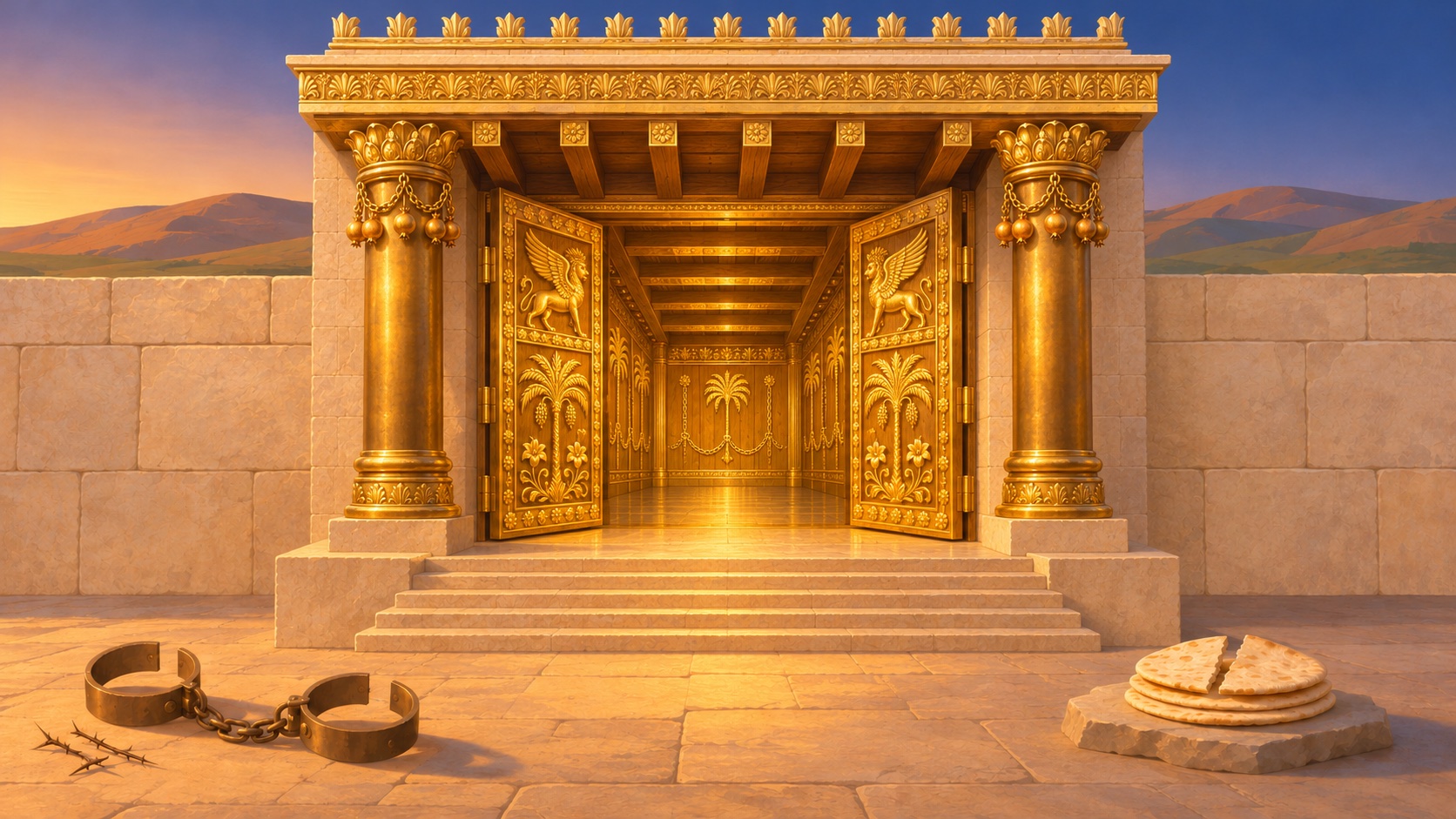
What's in this picture
- The open doors of the house of the LORD are the turn of the book. Ahaz “shut up the doors of the house of the LORD, and he made him altars in every corner of Jerusalem” (2 Chr. 28:24); his son Hezekiah, “in the first year of his reign, in the first month, opened the doors of the house of the LORD, and repaired them” (2 Chr. 29:3). They answer the promise the LORD gave Solomon at this house: “If my people … shall humble themselves, and pray, and seek my face, and turn from their wicked ways; then will I hear from heaven” (2 Chr. 7:14). The way back to the LORD is not closed.
- The porch, the two pillars and the gold within are the house Solomon built: “he made before the house two pillars,” with “chains” and “an hundred pomegranates” on them, “and called the name of that on the right hand Jachin, and the name of that on the left Boaz” (2 Chr. 3:15–17); “the greater house he ceiled with fir tree, which he overlaid with fine gold, and set thereon palm trees and chains” (2 Chr. 3:5). At its dedication “the glory of the LORD had filled the house of God” (2 Chr. 5:14).
- The open fetters among the thorns are Manasseh’s, the worst of Judah’s kings. The Assyrians “took Manasseh among the thorns, and bound him with fetters, and carried him to Babylon”; there “he besought the LORD his God, and humbled himself greatly,” and the LORD “heard his supplication, and brought him again to Jerusalem” (2 Chr. 33:11–13). Only Chronicles tells it. The fetters lie empty: even Manasseh was heard.
- The broken unleavened bread is Hezekiah’s Passover, where many “did they eat the passover otherwise than it was written,” and Hezekiah prayed, “The good LORD pardon every one that prepareth his heart to seek God … though he be not cleansed according to the purification of the sanctuary. And the LORD hearkened to Hezekiah, and healed the people” (2 Chr. 30:18–20).
The chapters
Thirty-six chapters in three parts. Solomon builds the temple, and at its dedication the glory of the LORD fills the house. The kingdom divides, and the kings of Judah are measured by whether they seek the LORD: Asa, Jehoshaphat, Joash, Uzziah, Ahaz. Then Hezekiah cleanses the temple and invites all Israel to the Passover, Manasseh repents in chains, Josiah keeps the Passover again, and after the fall of Jerusalem Cyrus proclaims the return.
The Glory of the LORD Filled the House
Solomon asks for wisdom at Gibeon, builds the temple on mount Moriah with Huram's help, and brings up the ark. The singers praise, the cloud fills the house, Solomon prays, and fire comes down from heaven. The LORD answers with a promise and a warning, and the queen of Sheba comes to hear his wisdom.
- 1 Wisdom and Knowledge Is Granted unto Thee Solomon takes all Israel to the tabernacle at Gibeon and offers a thousand burnt offerings on the altar of Moses' day. That night God asks what He should give him; Solomon asks for wisdom and knowledge to judge God's people, and is given riches and honor besides.
- 2 Who Is Able to Build Him an House? Solomon writes to Huram king of Tyre for timber and a master craftsman, telling him what the house will be for and why no house can hold its God; Huram blesses the LORD and sends both, and the strangers in the land are numbered for the work.
- 3 In Mount Moriah Solomon begins the house of the LORD on the hill where the LORD appeared to David, measures it, covers it with gold, sets two cherubim in the most holy house and a veil before it, and raises two pillars at the door.
- 4 All the Vessels That Were for the House of God Solomon makes the great bronze altar, the sea on twelve oxen and the ten lavers for the court, ten lampstands and ten tables of gold for the house, and the two courts; Huram finishes the pillars and the bronze vessels, and gold furnishes the holy place to the doors of the most holy place.
- 5 The House Was Filled with a Cloud The finished house receives David's treasures and then the ark, carried up from Zion and set under the cherubims' wings. As all the priests and the Levite singers sound together as one, praising the LORD's mercy, a cloud fills the house and the priests cannot stand to minister.
- 6 Arise into Thy Resting Place Solomon blesses the congregation, then kneels on a bronze platform before all Israel and prays that whenever the people pray toward the house, the LORD will hear from heaven and forgive; he ends by calling on the LORD to arise into His resting place and to remember the mercies of David.
- 7 Then Will I Hear from Heaven Fire falls on the offerings as Solomon ends his prayer, and the people bow on the pavement. After fourteen days of feasting the people go home glad, and the LORD appears to Solomon by night with His answer, the promise “If my people … shall humble themselves,” and the terms on which the house will stand.
- 8 So the House of the LORD Was Perfected Solomon builds and fortifies cities from Hamath to Beth-horon, sets the peoples left in the land to forced labor, moves Pharaoh's daughter away from the places where the ark had been, orders the temple's offerings and courses by the law of Moses and the command of David, and sends ships to Ophir for gold.
- 9 To Be King for the LORD Thy God The queen of Sheba comes to test Solomon's wisdom and goes home blessing the LORD who set him on His throne. Then the gold, the ivory throne, the ships and the horses, and Solomon dies after forty years with nothing said of his turning.
Believe in the LORD Your God
The kingdom divides, and the kings of Judah are told one by one. Abijah, Asa and Jehoshaphat seek the LORD and are helped; Jehoram, Ahaziah and Athaliah follow Ahab's house; Joash, Amaziah and Uzziah begin well and end badly; and Ahaz shuts the doors of the house of the LORD.
- 10 Israel Rebelled against the House of David The tribes ask Solomon's son for a lighter yoke; Rehoboam forsakes the old men's counsel, promises scorpions, and the north goes to its tents and the kingdom is divided.
- 11 Such as Set Their Hearts to Seek the LORD Rehoboam obeys a prophet's word not to fight the northern tribes, fortifies the towns of Judah, and is strengthened by the priests, Levites and others from the north who come to Jerusalem to worship; then he sets his large household in order and names Abijah his heir.
- 12 That They May Know My Service Rehoboam grows strong and forsakes the law, and Shishak of Egypt comes against Jerusalem. The prophet Shemaiah names the reason, the king and his princes humble themselves, and the LORD spares the city but leaves them to learn what serving another king costs.
- 13 God Himself Is with Us for Our Captain Abijah of Judah stands on a mountain between two armies and preaches to Jeroboam's host about David's covenant and the LORD's priests. Caught in an ambush, Judah cries to the LORD, the priests sound the trumpets, and Israel is routed, because Judah relied on the LORD.
- 14 We Rest on Thee Asa clears away the strange altars and commands Judah to seek the LORD, and builds in ten quiet years; when Zerah the Ethiopian comes with a vast host, Asa cries that Judah rests on the LORD, and the LORD smites the Ethiopians.
- 15 He Was Found of Them The prophet Azariah meets Asa coming home from battle with a promise and a warning; the king takes courage, clears the land of idols, and all Judah, with newcomers from the north, swears with shouting to seek the LORD.
- 16 Thou Hast Relied on the King of Syria Asa buys Ben-hadad's help against Baasha, and it works; Hanani the seer tells him what it cost. The king who once prayed “we rest on thee” puts the seer in prison, and in his last disease he seeks not the LORD.
- 17 His Heart Was Lifted Up in the Ways of the LORD Asa's son Jehoshaphat seeks the LORD, sends princes, Levites and priests through Judah with the book of the law, and the kingdoms around him make no war.
- 18 Even What My God Saith, That Will I Speak Jehoshaphat, rich and allied by marriage to Ahab, goes up with him to Ramoth-gilead; four hundred prophets promise victory, Micaiah tells what he saw before the LORD's throne, and in the battle Ahab dies while the LORD helps Jehoshaphat.
- 19 Ye Judge Not for Man, but for the LORD Jehu the seer meets Jehoshaphat coming home from Ahab's war with wrath and with praise; the king goes out again among his people, sets judges in the cities and a court at Jerusalem, and charges them to judge in the fear of the LORD.
- 20 The Battle Is Not Yours, but God’s Moab, Ammon and Mount Seir come against Judah; the king and people fast and pray at the temple, a Levite prophesies, singers go out before the army, and the invaders destroy one another.
- 21 The LORD Would Not Destroy the House of David Jehoram kills his brothers, marries into Ahab's house and leads Judah after its gods. A writing from Elijah names his sins and his sentence, and every line of it comes true; yet for the covenant's sake David's house is kept.
- 22 The House of Ahaziah Had No Power to Keep Still the Kingdom Ahaziah reigns one year on his mother's counsel, goes to war beside Ahab's son and dies in Jehu's purge; Athaliah destroys the royal seed, and one infant is hidden in the house of God.
- 23 The King's Son Shall Reign In the seventh year Jehoiada the priest gathers the Levites, crowns the hidden son of David in the house of God, and has Athaliah put to death; the people covenant to be the LORD's, break down Baal's house, and the worship of the house is set again in David's order.
- 24 He Hath Also Forsaken You Joash repairs the temple while Jehoiada lives; after the priest's death he listens to the princes, has Jehoiada's son Zechariah stoned in the temple court, and within the year the Syrians come and his servants kill him.
- 25 The LORD Is Able to Give Thee Much More Than This Amaziah sends home the soldiers he hired from Israel at a prophet's word and defeats Edom, then sets up Edom's gods, silences the prophet sent to rebuke him, and takes counsel for a war that breaks Jerusalem's wall.
- 26 Marvellously Helped, till He Was Strong Uzziah seeks God and prospers in war, building and farming; grown strong and proud, he goes into the temple to burn incense, is struck with leprosy at the altar, and lives out his days in a house apart.
- 27 He Prepared His Ways Jotham does all that his father Uzziah did except go into the temple, builds and subdues Ammon, and grows mighty because he ordered his ways before the LORD, though the people still do corruptly.
- 28 This Is That King Ahaz Ahaz walks in the ways of the kings of Israel, and Syria and Israel defeat Judah in the field; a prophet in Samaria persuades Israel's army to send its captives home clothed and fed; Ahaz buys help from Assyria that does not help him, sacrifices to the gods of Damascus, and shuts the doors of the LORD's house.
If Ye Return unto Him
Hezekiah opens and cleanses the temple and calls all Israel to the Passover, and the LORD delivers Jerusalem from Sennacherib. Manasseh fills the city with idols, then repents in Babylon and is restored. Josiah finds the book of the law and keeps a great Passover. The city and the house are burned, and Cyrus proclaims that the house shall be built again.
- 29 The Service of the House of the LORD Was Set in Order In the first month of his reign Hezekiah opens the doors his father shut; the Levites carry the uncleanness out to the Kidron, the priests make a sin offering for all Israel, the singers take up David's songs, and the people bring their thank offerings with a willing heart.
- 30 The Good LORD Pardon Every One Hezekiah sends letters through all Israel to keep the Passover at Jerusalem in the second month; most of the north mocks, some humble themselves and come, the king prays for those who eat unclean, and the LORD heals the people.
- 31 The LORD Hath Blessed His People When the Passover ends, the worshipers break the idols from Judah to Manasseh; Hezekiah orders the priests' and Levites' courses and their support, the people's tithes rise in heaps from harvest to ingathering, and Levites are set over the stores to deal them out faithfully.
- 32 With Us Is the LORD Our God Sennacherib invades Judah; Hezekiah walls the city, stops the springs and tells the people that the LORD will fight for them, and the LORD saves Jerusalem. Healed of his sickness, the king's heart is lifted up; he humbles himself, and when envoys come from Babylon God leaves him to try him.
- 33 He Humbled Himself Greatly Manasseh rebuilds what Hezekiah tore down and sets his idol in the LORD's house; carried in chains to Babylon, he humbles himself and prays, and the LORD hears him and brings him home; his son Amon does not humble himself, and is killed in his own house.
- 34 He Began to Seek After the God of David Josiah seeks the LORD as a youth and clears the idols from Judah and from the ruined cities of the north; the book of the law is found as the temple is repaired, Huldah answers that the judgment will stand but the king who humbled himself is heard, and Josiah binds the people to the covenant.
- 35 Such a Passover as Josiah Kept Josiah sets the priests and Levites in their places and gives the flocks, and Judah keeps a Passover by the book, like none since Samuel; years later he goes out against Pharaoh Necho, does not hear the word from God that Necho brings, and dies of his wounds, mourned by Jeremiah and all Judah.
- 36 Because He Had Compassion on His People Four kings follow Josiah in quick succession, the last of them deaf to Jeremiah; the LORD's messengers are mocked, the house is burned and Judah is carried to Babylon; then Cyrus of Persia bids the LORD's people go up.
Themes
Ideas that run through many chapters, gathered in one place.
Beloved passages
- “the trumpeters and singers were as one, to make one sound to be heard in praising and thanking the LORD”2 Chronicles 5:13
- “If my people, which are called by my name, shall humble themselves, and pray, and seek my face”2 Chronicles 7:14
- “For the eyes of the LORD run to and fro throughout the whole earth, to shew himself strong in the behalf of them whose heart is perfect toward him”2 Chronicles 16:9
- “neither know we what to do: but our eyes are upon thee”2 Chronicles 20:12
- “Believe in the LORD your God, so shall ye be established; believe his prophets, so shall ye prosper”2 Chronicles 20:20
Most-used sources
Every note cites its sources. These are the ones this commentary leans on most.
- “Chronicles”, Bible Dictionary.
- “Chronicles”, Guide to the Scriptures.
- Introduction to the Books of 1 Chronicles; 2 Chronicles, Old Testament Seminary Teacher Manual (2014).
- Scripture Central, “Why is Chronicles in the Bible?”, KnoWhy #861 (July 14, 2026).