This guide covers the years from the division of David's kingdom, under Rehoboam and Jeroboam, to the end of Hezekiah's reign. The northern kingdom, Israel, with its capital at Samaria, lasted over 200 years1 and fell to Assyria in 721 BC, though the date may be 722.2 Judah, where David's house held the throne and which outlasted Israel by 135 years,3 paid Assyria tribute until Hezekiah rebelled;4 Sennacherib came to Palestine in 701.5 “Now in the fourteenth year of king Hezekiah did Sennacherib king of Assyria come up against all the fenced cities of Judah, and took them” (2 Kgs. 18:13), yet Jerusalem was at length delivered.6
The division is dated 975,7 9318 or about 925 BC.1 For the whole sweep see A Timeline of the Old Testament.
The map
For the land itself, see The Land.
Rulers and events
All dates are approximate; where they differ, the table gives each.
| Date (BC) | Who | What happened | Read |
|---|---|---|---|
| 975, 931 or c. 925 | Israel: Jeroboam. Judah: Rehoboam | The north revolts over Solomon's burdens;10 Jeroboam of Ephraim is its first king and sets up calves at Dan and Bethel11 | 1 Kgs. 12 |
| 874–853 | Israel: Ahab | Marries Jezebel, a Sidonian; Elijah contests the priests of Baal; Ahab is killed in battle8 | 1 Kgs. 16–22 |
| 841–814 | Israel: Jehu | Anointed by a messenger of Elisha; destroys Ahab's house, though he was himself a wicked man;8,12 pays tribute to Assyria's Shalmaneser III in 8425 | 2 Kgs. 9–10 |
| 792–753 (or 788–747) | Israel: Jeroboam II | The ablest of Israel's kings and the most successful in war; Amos and Hosea prophesy in his reign, and Jonah lived under him11,13,8,14 | 2 Kgs. 14:23–29 |
| from 792 | Judah: Uzziah | Reigns 52 years in all, 24 jointly with his father; strong army, fortified Jerusalem; struck with leprosy for entering the temple, c. 75015 | 2 Chr. 26 |
| 740–732 | Judah: Jotham | Enlarges the temple gate and strengthens fortifications8,15 | 2 Kgs. 15:32–38 |
| 745–727 | Assyria: Tiglath-pileser III | Takes tribute from Damascus and Samaria (738);5 carries off Galilee and the trans-Jordan tribes (740, or after 734);16,5 Damascus falls in 734 or about 7335,17 | 2 Kgs. 15:19; 2 Kgs. 15:29 |
| from 735 | Judah: Ahaz (732–715). Israel: Pekah. Syria: Rezin | Pekah and Rezin attack Judah; Isaiah counsels trust in the Lord; Ahaz asks Assyria for help and pays tribute from temple and throne15,4,8 | 2 Kgs. 16:5–9; Isa. 7 |
| 727–722 | Assyria: Shalmaneser V. Israel: Hoshea | Hoshea rebels and sends to Egypt; Shalmaneser begins the siege of Samaria, which lasts three years15,5,18 | 2 Kgs. 17:1–5 |
| 722 or 721 | Assyria: Sargon II (722–705) | Sargon concludes the siege;5 “the king of Assyria took Samaria, and carried Israel away into Assyria” (2 Kgs. 17:6), and settlers come in from Babylon and elsewhere (2 Kgs. 17:24)19 | 2 Kgs. 17 |
| c. 715 | Judah: Hezekiah | Purges idolatry and breaks Moses's brazen serpent;15 restores the temple services, with Isaiah's help6 | 2 Kgs. 18:1–6; 2 Chr. 29–31 |
| 711 | Assyria: Sargon II | The Philistines rise;5 Isaiah goes “naked and barefoot” as a sign (Isa. 20:2) | Isa. 20 |
| c. 705 or after 701 | Babylon: Merodach-baladan | A Babylonian prince who had rebelled against Assyria sends messengers to Hezekiah;15 he sought allies on Sargon's death (705),5 but the embassy is listed among events from 701 on15 | 2 Kgs. 20:12–13 |
| 701 | Assyria: Sennacherib (705–681) | Hezekiah has refused tribute;15 Sennacherib takes 46 cities, sets his headquarters at Lachish and besieges Jerusalem;15,20 the Assyrian host is destroyed and he goes home to Nineveh21,5 | 2 Kgs. 18–19; Isa. 36–37 |
| 681–668 | Assyria: Esarhaddon | Sennacherib is killed by his sons; Esarhaddon conquers Egypt21,5 | 2 Kgs. 19:36–37 |
| c. 686 | Judah: Hezekiah's reign ends (715–686) | Manasseh, joint king from 697, rules alone.8 By another reckoning, Hezekiah died a year after Jerusalem's deliverance in 701,6 about 700 | 2 Kgs. 20:21 |
What archaeology has found
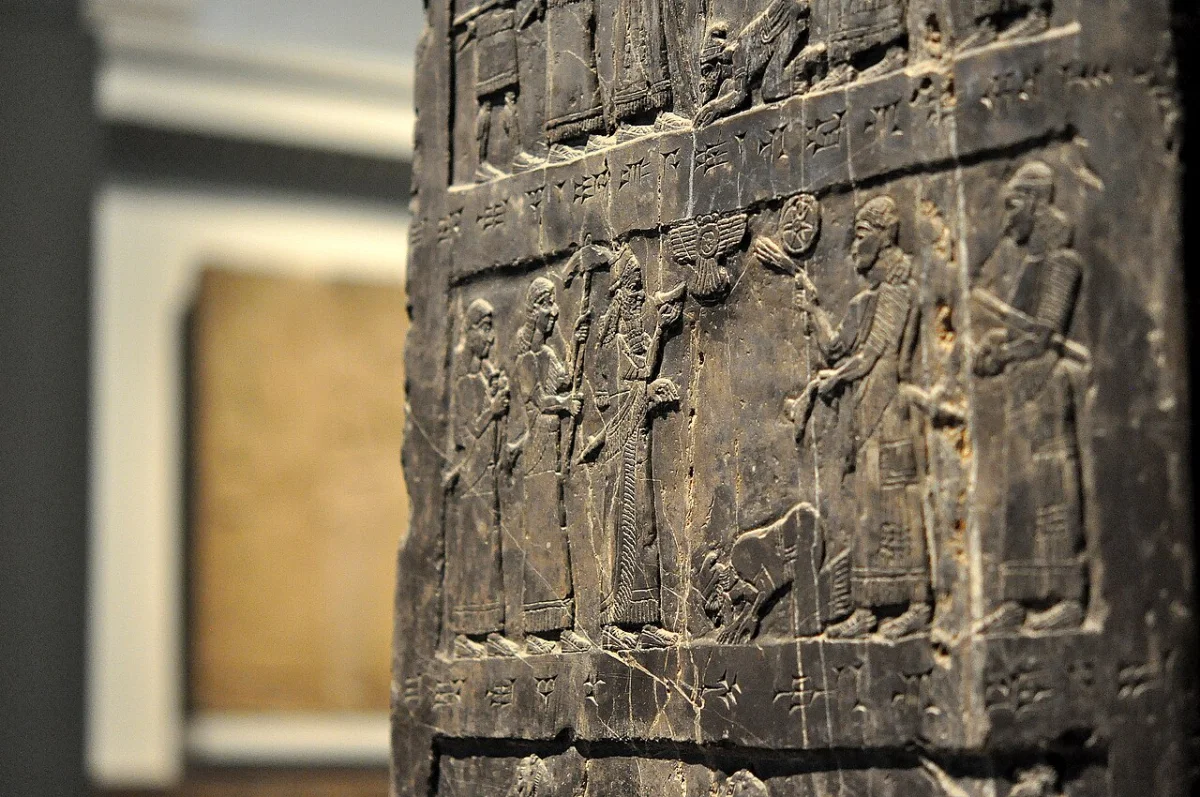
- Sennacherib’s annals give the Assyrian king’s own account of 701. He boasts of taking forty-six of Hezekiah’s strong cities and of shutting Hezekiah up “like a caged bird” in Jerusalem,23 but he does not claim to have taken the city,23 which fits Isa. 37:33–37. Hezekiah’s tribute was sent after him to Nineveh.24
- The Lachish reliefs depict the siege of Lachish (Isa. 36:2) on an Assyrian monument still in existence;20 their inscription shows Sennacherib on a throne while “the booty of Lachish passed before him.”25
- Hezekiah’s Tunnel runs about 1,770 feet through limestone rock, bringing the Gihon spring inside the walls to the pool of Siloam (2 Kgs. 20:20). The Siloam Inscription, carved near the Siloam end, tells how the workmen digging from both ends met; it is now in the museum at Istanbul.26
The nations
| Nation | Who and where | With Israel and Judah |
|---|---|---|
| Assyria | The Tigris valley, centered on Nineveh;5 a major power from the mid-12th century to the close of the 7th,27 its Neo-Assyrian Empire lasting from about 911 to the fall of Nineveh in 612;28 “ruled by terror,” and deported whole populations27 | Took the north and laid Judah under tribute; “the rod of mine anger” (Isa. 10:5); 2 Kgs. 17; 2 Kgs. 18–19 |
| Syria | Aram; its capital Damascus17 | Allied with Israel against Assyria in Ahab's day;8 Rezin and Pekah threatened Judah;4 2 Kgs. 16:5–9 |
| Egypt | Shishak took Jerusalem under Rehoboam9 | Assyria's rival; allying with it against Assyria was Judah's policy, which Isaiah opposed;9 1 Kgs. 14:25–26; Isa. 30:1–5 |
| Cush | South of Egypt, including modern Nubia29 | The Ethiopian So made himself lord of Egypt and stirred up revolt;5 2 Kgs. 17:4; 2 Kgs. 19:9 |
| Philistines | The coast from Joppa to the Egyptian desert; five chief cities30 | Conquered by Tiglath-pileser in 734;30 rose again in 711 and 701;5 Isa. 20 |
| Moab | East of the Dead Sea; akin to Israel31 | Omri put it under tribute;8 “constant warfare”;31 2 Kgs. 3:6–27 |
| Edom | South of the Dead Sea; Esau's descendants32 | “Great mutual hatred”;32 Edomites and Philistines attacked Ahaz;8 2 Chr. 28:17–18 |
| Tyre and Sidon | The Phoenician coast; Tyre a commercial seaport33 | Allied with David and Solomon;33 Ahab married a Sidonian;8 1 Kgs. 16:31; Amos 1:9 |
| Babylon | On the Euphrates; part of the Assyrian empire in this period34 | Merodach-baladan, who rebelled against Assyria, wrote to Hezekiah;15 2 Kgs. 20:12–13; Isa. 39 |
The books of this period
- 1 Kgs. 12–22, 2 Kgs. 1–20 and 2 Chr. 10–32: the two kingdoms' history; 1 Kings 12 tells of the division.35
- Jonah, Amos and Hosea, under Jeroboam II.13,11
- Micah, in the days of Jotham, Ahaz and Hezekiah (Micah 1:1); his ministry continued through Ahaz's reign and into Hezekiah's.8
- Isaiah, a prophet in Jerusalem 740–701 BC.36 For reading him, see How to Read Isaiah.
Sources
- “Israel, Kingdom of”, Bible Dictionary. a b
- Chapter 12: The Fall of the Northern Kingdom (2 Kings 14–20), Old Testament Student Manual: 1 Kings–Malachi (2003). a
- “Judah, Kingdom of”, Bible Dictionary. a
- 2 Kings 16–25, Scripture Helps: Old Testament. a b c
- “Assyria and Babylonia”, Bible Dictionary. a b c d e f g h i j k l m n o p
- “Hezekiah”, Bible Dictionary. a b c
- “Chronology of the Old Testament”, Bible Dictionary, “Bible Chronology”. a
- Enrichment A: The Divided Kingdoms, Old Testament Student Manual: 1 Kings–Malachi (2003). a b c d e f g h i j k l
- “Egypt”, Bible Dictionary. a b c
- “Rehoboam”, Bible Dictionary. a
- “Jeroboam”, Bible Dictionary. a b c
- Chapter 6: 2 Kings 3–13: Hearkening unto the Counsel of God, Old Testament Student Manual: 1 Kings–Malachi (2003). a
- “Jonah”, Bible Dictionary. a b
- Chapter 10: The Ministry of Hosea: A Call to Faithfulness (Hosea), Old Testament Student Manual: 1 Kings–Malachi (2003). a
- Enrichment F: The World of Isaiah, Old Testament Student Manual: 1 Kings–Malachi (2003). a b c d e f g h i j
- “Captivities of the Israelites”, Bible Dictionary. The Church of Jesus Christ of Latter-day Saints. a
- “Damascus”, Bible Dictionary. a b
- “Samaria”, Guide to the Scriptures. a
- The Holy Scriptures (Latter-day Saint editions), text and chapter headings, The Church of Jesus Christ of Latter-day Saints. a
- “Lachish”, Bible Dictionary. a b
- “Sennacherib”, Bible Dictionary. a b
- Dana M. Pike, “Recovering the World of the Bible”, In Prelude to the Restoration: From Apostasy to the Restored Church (Religious Studies Center and Deseret Book, 2004), 159–84. a
- Daniel David Luckenbill, The Annals of Sennacherib, Oriental Institute Publications 2. Chicago: University of Chicago Press, 1924 (includes the Oriental Institute prism’s account of the siege of Jerusalem and the Bavian inscription on the destruction of Babylon), p. 11. a b
- Daniel David Luckenbill, The Annals of Sennacherib, Oriental Institute Publications 2. Chicago: University of Chicago Press, 1924 (includes the Oriental Institute prism’s account of the siege of Jerusalem and the Bavian inscription on the destruction of Babylon), pp. 11–12. a
- Daniel David Luckenbill, The Annals of Sennacherib, Oriental Institute Publications 2. Chicago: University of Chicago Press, 1924 (includes the Oriental Institute prism’s account of the siege of Jerusalem and the Bavian inscription on the destruction of Babylon), epigraph XXV, pp. 156–57. a
- “Hezekiah’s Tunnel”, Bible Dictionary. The Church of Jesus Christ of Latter-day Saints. a
- “Assyria”, Guide to the Scriptures. a b
- Scripture Central, “Why Is the Great and Abominable Church Described like the Assyrian Empire?”, KnoWhy #711 (January 23, 2024). a
- “Ethiopia or Cush”, Bible Dictionary. a
- “Philistines”, Bible Dictionary. a b
- “Moab”, Bible Dictionary. a b
- “Edom”, Bible Dictionary. a b
- “Tyre”, Bible Dictionary. a b
- “Babylon or Babel”, Bible Dictionary. a
- 1 Kings 12–13; 17–22, Scripture Helps: Old Testament. a
- “Isaiah”, Bible Dictionary. a
Further reading
- “Merodach-baladan”, Bible Dictionary.