This guide covers Israel's settlement of the land under Joshua and the judges, and the united kingdom of Saul, David and Solomon. It ends where Solomon's death divided the kingdom in two;1 the story goes on in Two Kingdoms and Assyria. For the whole Old Testament, see A Timeline of the Old Testament.
The dates are uncertain. The judges' dates are “very uncertain,”2 and no Church reference dates the conquest; one dating places it “between 1250 and 1200 B.C.”3 For the kings, the Bible Chronology gives Saul 1095, David in Jerusalem 1047, Solomon 1015 and the division 975.2 Other Church pages say David took Jerusalem about 1000,4 begin Rehoboam and Jeroboam in 931,5 and put David's death around 968.1 The table gives each date as its source does.
The map
For the land's regions, see The Land.
Rulers and events
| When | Who | What happened | Read |
|---|---|---|---|
| Conquest: 1250–1200 (one proposed dating)3 | Joshua: Jordan, Jericho | Israel crosses the Jordan and camps at Gilgal; the wall of Jericho falls at the shout. Rahab, who hid the spies, is named in Matthew as an ancestor of Jesus;6 “Joshua” means “Jehovah saves,” and the name Jesus comes from it7 | Josh. 1–6 |
| Joshua: Ai, Ebal | Achan keeps spoil from Jericho;6 the Lord tells Joshua to take Ai (Josh. 8:1); Joshua builds an altar on Mount Ebal (Josh. 8:30–31), a renewal of the covenant6 | Josh. 7–8 | |
| Joshua: Gibeon | The Gibeonites trick Joshua into a league (Josh. 9:3–4, 15); “Sun, stand thou still upon Gibeon” (Josh. 10:12) | Josh. 9–10 | |
| Joshua: the land divided | “So Joshua took the whole land” (Josh. 11:23), yet “there remaineth yet very much land to be possessed” (Josh. 13:1); the conquest did not happen overnight.8 The tabernacle is set up at Shiloh (Josh. 18:1) | Josh. 11–22 | |
| Joshua: Shechem | “choose you this day whom ye will serve” (Josh. 24:15); Joshua dies at 110 (Josh. 24:29) | Josh. 23–24 | |
| Very uncertain2 | The judges | A confederation of tribes, not a unified nation;9 “another generation after them, which knew not the Lord” (Judg. 2:10). The pattern: Israel “did evil” and “cried unto the Lord,” and the Lord “raised up a deliverer”10 | Judg. 1–3 |
| Othniel, Ehud | Othniel of Judah against Chushan-rishathaim; Ehud of Benjamin against Eglon of Moab3 | Judg. 3 | |
| Deborah, Barak | Deborah is a prophetess and the only female judge;11 she and Barak defeat Jabin and Sisera3 | Judg. 4–5 | |
| Gideon | “Go in this thy might, and thou shalt save Israel from the hand of the Midianites” (Judg. 6:14); three hundred men (Judg. 7:7) | Judg. 6–8 | |
| Jephthah | He vows that “whatsoever cometh forth of the doors of my house” shall be “the Lord’s” (Judg. 11:31). Readings differ: he offered his daughter in sacrifice;12 the vow dedicated her to lifelong virginity, though “a literal reading of the text may support” sacrifice3 | Judg. 10–12 | |
| Samson | Born a Nazarite to begin delivering Israel from the Philistines (Judg. 13:5); seemingly strong in body but weak in moral character;13 he dies at Gaza (Judg. 16:30) | Judg. 13–16 | |
| Ruth | “In the days when the judges ruled” (Ruth 1:1); a foreign widow,14 redeemed by a kinsman (the Hebrew word for him means “redeemer”);14 Obed is “the father of Jesse, the father of David” (Ruth 4:17) | Ruth 1–4 | |
| Eli, Samuel | Eli is high priest and judge,15 at Shiloh (1 Sam. 1:3, 9); Israel is smitten and the ark taken (1 Sam. 4:10–11); Samuel becomes the great prophet and judge16 | 1 Sam. 1–7 | |
| 10952 | Saul | The elders ask for a king “like all the nations” (1 Sam. 8:5), which showed a lack of trust in Jehovah's promises;17 Saul is anointed, then rejected from being king;18 he falls on Mount Gilboa (1 Sam. 31:1) | 1 Sam. 8–31 |
| 1055 Hebron; 1047 Jerusalem, or about 10002,4 | David | Judah anoints him at Hebron (2 Sam. 2:4); for seven years the tribes are not united;4 “David was thirty years old when he began to reign, and he reigned forty years” (2 Sam. 5:4). He takes Jerusalem, a hill fortress till then independent,19 and brings up the ark (2 Sam. 6:12) | 1 Sam. 16–17; 2 Sam. 2–6 |
| The covenant with David | “thy throne shall be established for ever” (2 Sam. 7:16). Read as an unconditional promise that a descendant would rule forever;20 Ps. 132:11–12 adds that David's earthly kingdom would endure only if his descendants stayed faithful;21 it is fulfilled in Jesus Christ.22 | 2 Sam. 7 | |
| David's sin | David takes Bath-sheba, “the wife of Uriah the Hittite” (2 Sam. 11:3), and writes “Set ye Uriah in the forefront of the hottest battle” (2 Sam. 11:15); “Thou art the man” (2 Sam. 12:7); “I have sinned against the Lord” (2 Sam. 12:13); the sin had serious consequences for him and his children1 | 2 Sam. 11–12 | |
| 1015; temple begun 10122 | Solomon | Marries Pharaoh's daughter (1 Kgs. 3:1); “Hiram king of Tyre sent his servants unto Solomon” (1 Kgs. 5:1); “the cloud filled the house of the Lord” (1 Kgs. 8:10) | 1 Kgs. 1–10 |
| 975, 9312,5 | Solomon's end | “king Solomon loved many strange women” (1 Kgs. 11:1); “I will rend it out of the hand of thy son” (1 Kgs. 11:12). His building and forced labor bred resentment, especially in the north23 | 1 Kgs. 11 |
The nations
| Nation | Who and where | With Israel |
|---|---|---|
| Canaanites, Amorites | Independent city-states, nominally under Egypt;3 Amorites a northwest Semitic people26 | Named to be driven out (Josh. 3:10); left, they led many to worship their gods11 |
| Philistines | From Caphtor; on the coast before Abraham's day,27 or invading from the sea in the twelfth century BC;28 five chief cities27 | A struggle for supremacy, at its height at Saul's death, declining under David;27 1 Sam. 17 |
| Moab | East of the Dead Sea; akin to Israel29 | In “constant warfare” with Israel;29 Eglon (Judg. 3:12–14); David smote Moab (2 Sam. 8:2) |
| Ammon | East of Mount Gilead; descended from Lot30 | “Bitter enemies of Israel”;30 Nahash besieges Jabesh-gilead (1 Sam. 11:1) |
| Edom | South of the Dead Sea31 | David put garrisons in Edom (2 Sam. 8:14); “great mutual hatred”31 |
| Midianites, Amalekites | Wandering Arab tribes, often in conflict with Israel32 | Came up against Israel (Judg. 6:3); their power was broken by Saul and David33 |
| Arameans (Syria) | North and northeast of Palestine34 | David put garrisons in Syria of Damascus (2 Sam. 8:5–6); Rezon of Damascus became Solomon's adversary (1 Kgs. 11:23–25) |
| Tyre | King Hiram, a friend of David and Solomon35 | Sent cedar and craftsmen (2 Sam. 5:11) |
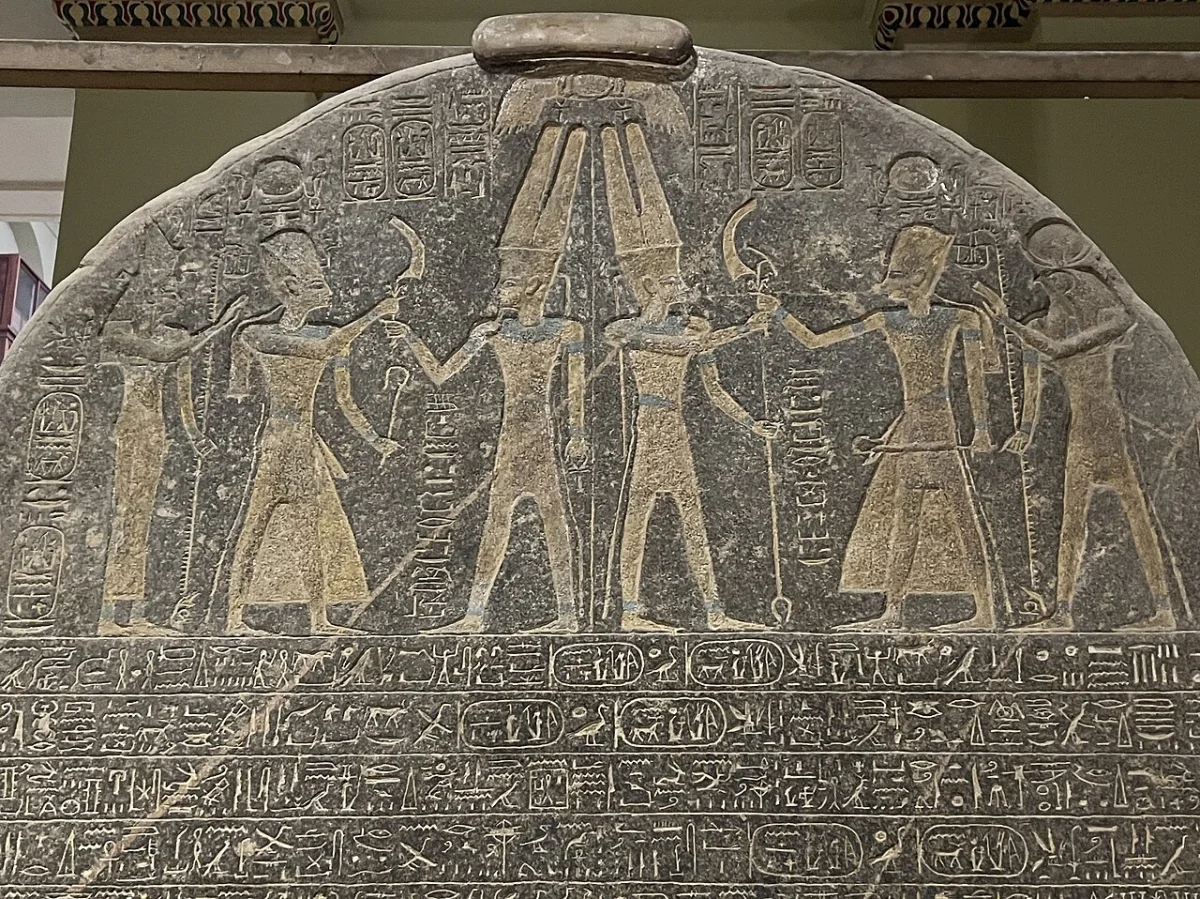
| Egypt | Made an alliance with Solomon36 | A treaty marriage (1 Kgs. 3:1);23 Jeroboam fled to Shishak (1 Kgs. 11:40) |
The books of this period
- Joshua: the conquest (1–12), then the allotment of the land and Joshua's last words (13–24).37
- Judges: compiled long after the events;9 with Ruth, the history from Joshua's death to Samuel's birth.9
- Ruth: a family from Bethlehem in the days of the judges, and David's ancestors.38
- 1 and 2 Samuel: one book in Hebrew, from Samuel's birth nearly to David's death, about 130 years.39
- 1 Kings 1–11: the reign of Solomon, the temple, and his turning to false gods.1
- 1 Chronicles 10–2 Chronicles 9: Saul's death (1 Chr. 10:6) to Solomon's death (2 Chr. 9:31); Chronicles cites sources such as “the book of Nathan the prophet.”40
- Psalms: seventy-three are ascribed to David.41
For more, see The Law, the Covenant and the Temple, Women and Marriage in the Old Testament (for Ruth) and The Land.
Sources
- 2 Samuel 11–12; 1 Kings 3; 6–9; 11, Scripture Helps: Old Testament. a b c d
- “Chronology of the Old Testament”, Bible Dictionary, “Bible Chronology”. a b c d e f g
- Judges 1–12: The Reign of the Judges, Part 1, Old Testament Student Manual: Genesis–2 Samuel. a b c d e f
- 2 Samuel 1–12: The Fall of King David, Old Testament Student Manual: Genesis–2 Samuel. a b c
- Enrichment A: The Divided Kingdoms, Old Testament Student Manual: 1 Kings–Malachi (2003). a b
- Joshua 1–8; 23–24, Scripture Helps: Old Testament (2025). a b c
- Joshua 1–8; 23–24, Come, Follow Me: Old Testament 2026. a
- Scripture Central, “Why Was the Conquest of Jericho More Important Than What Some in Israel May Have Realized? (KnoWhy 852)”, Scripture Central. a
- “Judges, book of”, Bible Dictionary. a b c
- Judges 2–4; 6–8; 13–16, Come, Follow Me: Old Testament 2026. a
- Judges 2–4; 6–8; 13–16, Scripture Helps: Old Testament. a b
- “Jephthah”, Bible Dictionary. a
- “Samson”, Bible Dictionary. a
- Ruth; 1 Samuel 1–7, Scripture Helps: Old Testament. a b
- “Eli”, Bible Dictionary. a
- “Samuel”, Bible Dictionary. a
- 1 Samuel 8–10; 13; 15–16, Scripture Helps: Old Testament. a
- “Saul”, Bible Dictionary. a
- “Jebus”, Bible Dictionary. a
- Jo Ann H. Seely and David Rolph Seely, “Jesus the Messiah: Prophet, Priest and King”, In Approaching Holiness: Exploring the History and Teachings of the Old Testament, ed. Krystal V. L. Pierce and David Rolph Seely (Religious Studies Center, Brigham Young University, 2021). a
- 1 Samuel 17–18; 24–26; 2 Samuel 5–7, Scripture Helps: Old Testament. a
- 1 Samuel 17–18; 24–26; 2 Samuel 5–7, Come, Follow Me: Old Testament 2026. a
- 1 Kings 1–11 Solomon: Man of Wisdom, Man of Foolishness, Old Testament Student Manual: 1 Kings–Malachi. a b
- David H. Bailey, “Science and Religion: Friends or Foes?”, In A Reason for Faith: Navigating LDS Doctrine & Church History, ed. Laura Harris Hales (Religious Studies Center and Deseret Book, 2016), 221–40. a
- Kerry Muhlestein, “Israel, Egypt, and Canaan”, In From Creation to Sinai: The Old Testament through the Lens of the Restoration, ed. Daniel L. Belnap and Aaron P. Schade (Provo, UT: Religious Studies Center, Brigham Young University; Salt Lake City: Deseret Book), 193–222. a b
- “Amorites”, Bible Dictionary. a
- “Philistines”, Bible Dictionary. a b c
- Jeffrey R. Chadwick, “Gath of the Philistines”, Religious Studies Center Review, Winter 2013. a
- “Moab”, Bible Dictionary. a b
- “Ammon, Ammonites”, Bible Dictionary. a b
- “Edom”, Bible Dictionary. a b
- “Midianites”, Bible Dictionary. a
- “Amalek, Amalekites”, Bible Dictionary. a
- “Syria”, Bible Dictionary. a
- “Hiram”, Bible Dictionary. a
- “Egypt”, Bible Dictionary. a
- “Joshua, book of”, Bible Dictionary. a
- “Ruth”, Bible Dictionary. a
- “Samuel, books of”, Bible Dictionary. a
- “Chronicles”, Bible Dictionary. a
- “Psalms”, Bible Dictionary. a
Further reading
- The Holy Scriptures (Latter-day Saint editions), text and chapter headings, The Church of Jesus Christ of Latter-day Saints.